
Key Takeaways.
- Master your pool stance with six expert tips on footwork, hand placement, and balance.
- Avoid these six common stance mistakes—find out how to improve your control and precision! Scroll down to find out now.
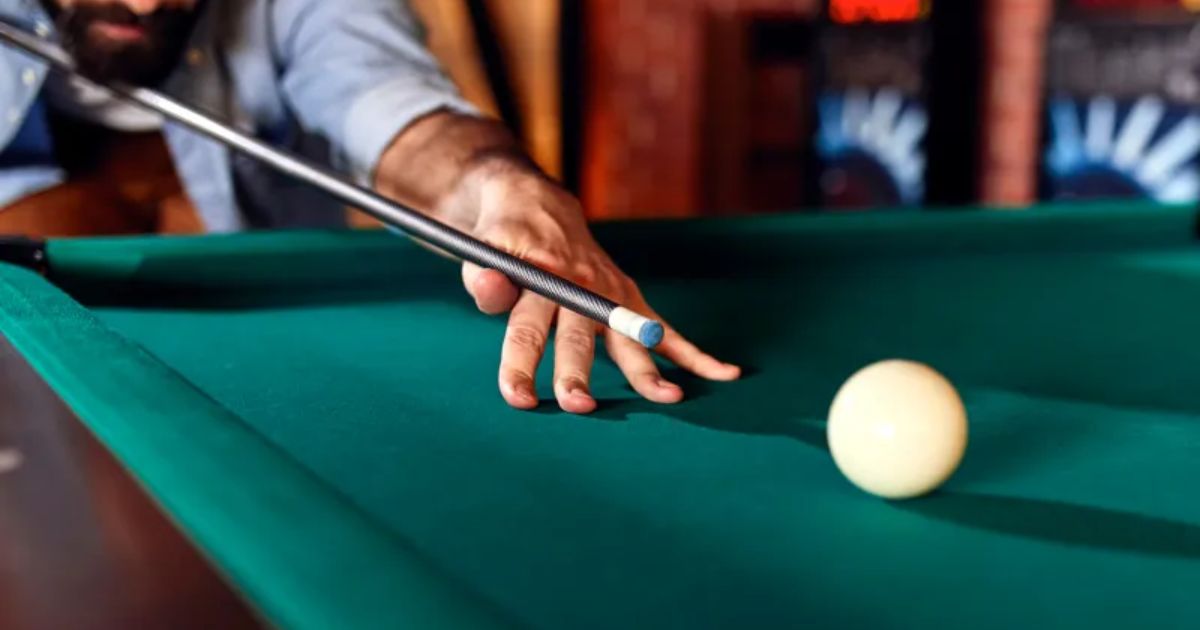
Set up a perfect pool stance

Understanding the Basics of Pool Stance
Pool stance is the term that describes how a player positions their feet and body when making a shot. Their best comfort will depend on their size and height.
Everyone has a unique stance. It’s all about finding what feels suitable for you. The main things to focus on are staying steady, ensuring your body is aligned well, ensuring nothing gets in the way of your movement, and feeling comfortable.
How you position your feet, body, knees, and head can vary greatly depending on your height, flexibility, body shape, and physical limitations. What works for one person might not work for another.
The primary purpose of a stance is to ensure you’re in a position where you can consistently aim well and make smooth, accurate movements every time. Your stance is suitable if it comfortably allows you to do that.
Tip 1: Finding Your Dominant Eye
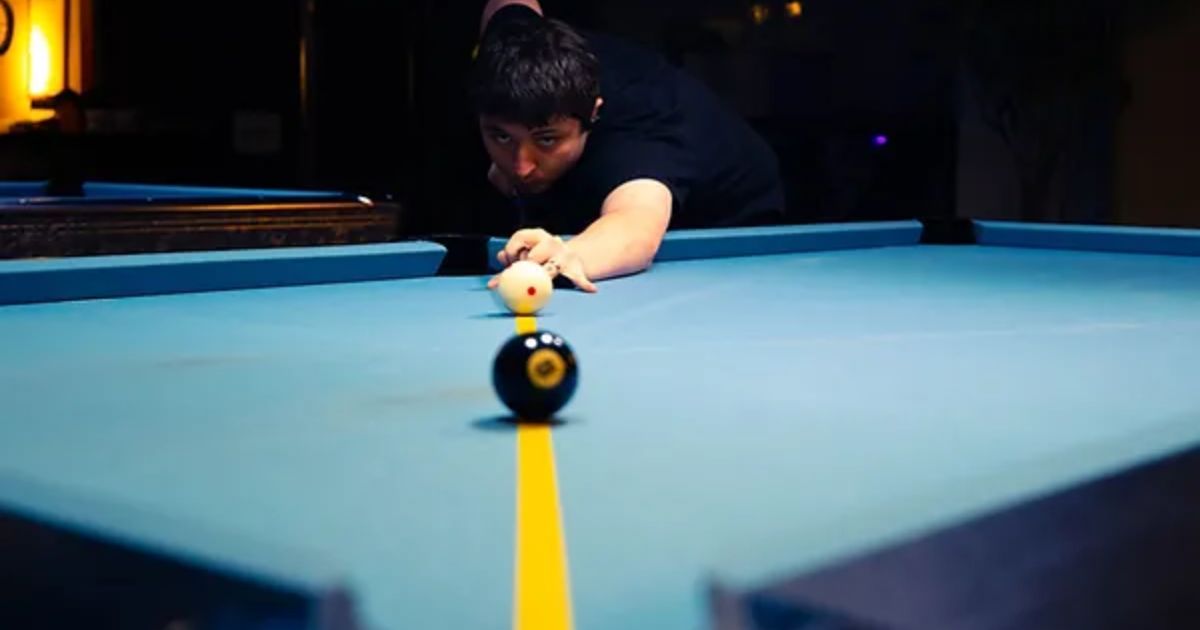
Determine dominant eye and aim for the purpose
The dominant eye affects your alignment and depth in the pool. When you aim for the purpose, your brain will lay on the image your eye took to estimate distance and accurately align your shot.
Here is how to find your dominant eye:
- Aim for a straight shot at the far corner pocket, ensuring it’s a long shot.
- Get into your stance and align your aim.
- Swing the cue stick a few times, stopping with the tip, almost touching the cue ball.
- Close your eyes and relax for 5 to 10 seconds.
- Open your eyes and assess your shot alignment.
*Note:
- If your alignment is still on target, your stance is solid.
- If you’re slightly off, there might be tension, imbalance, or another issue with your stance that needs improvement.
The dominant eye is crucial in the pool shooting stance. It processes visual information so that you can aim at the correct object. Knowing your dominant eye can help you appropriately position your body and pool cue for making a shot.
Tip 2: Foot Positioning
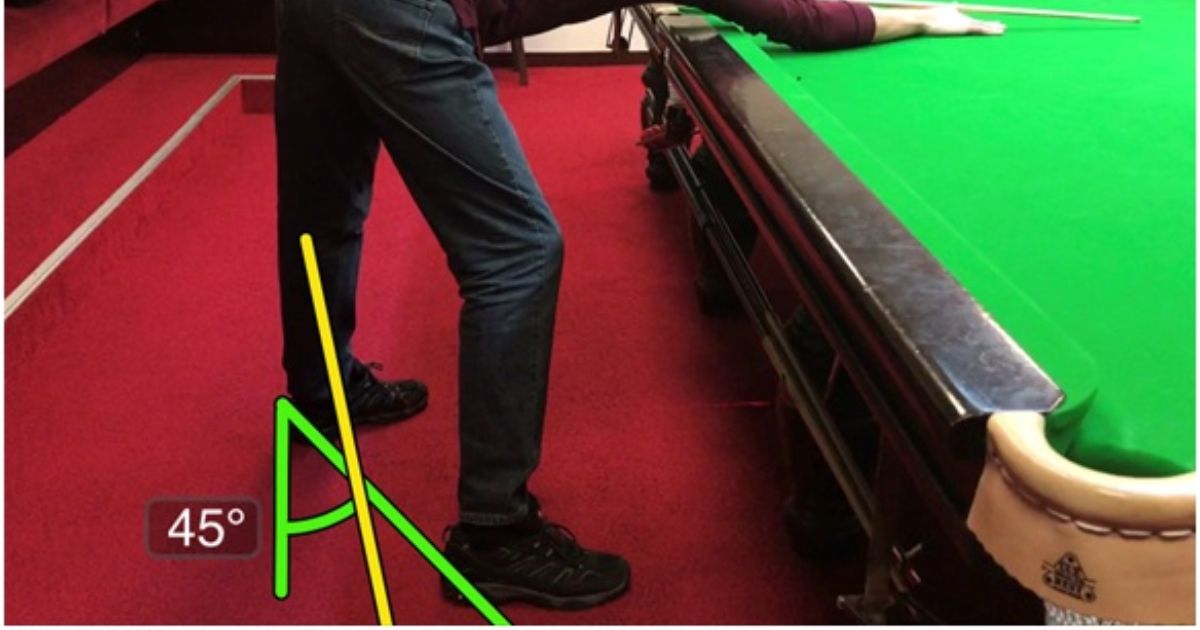
Adjusting 45 degree between two feet to have better stance
To get your stance right in the pool, align your feet with where you want the cue ball to go. Stand behind the cue ball, facing the direction you’ll shoot, and figure out your target spot on the cue ball. If you’re right-handed, ensure the center of your right foot lines up with this spot.
Angle your foot slightly outward to stay aligned with the shot. Then, step forward with your left foot toward the table until you feel comfortable.
There are three different foot stances, including:
- Square stance means your right and left heels are lined up straight with where you want to aim.
- Closed stance is when your front foot (closest to the target) is nearer to the target line than the back foot.
- Open stance is when the front foot is farther away from the target line than the back foot.
The distance between your feet can change depending on your body and the shot you’re taking. Ensure you’re comfortable and your right foot lines up with the shot and your whole body.
Tip 3: The Role of the Bridge Hand
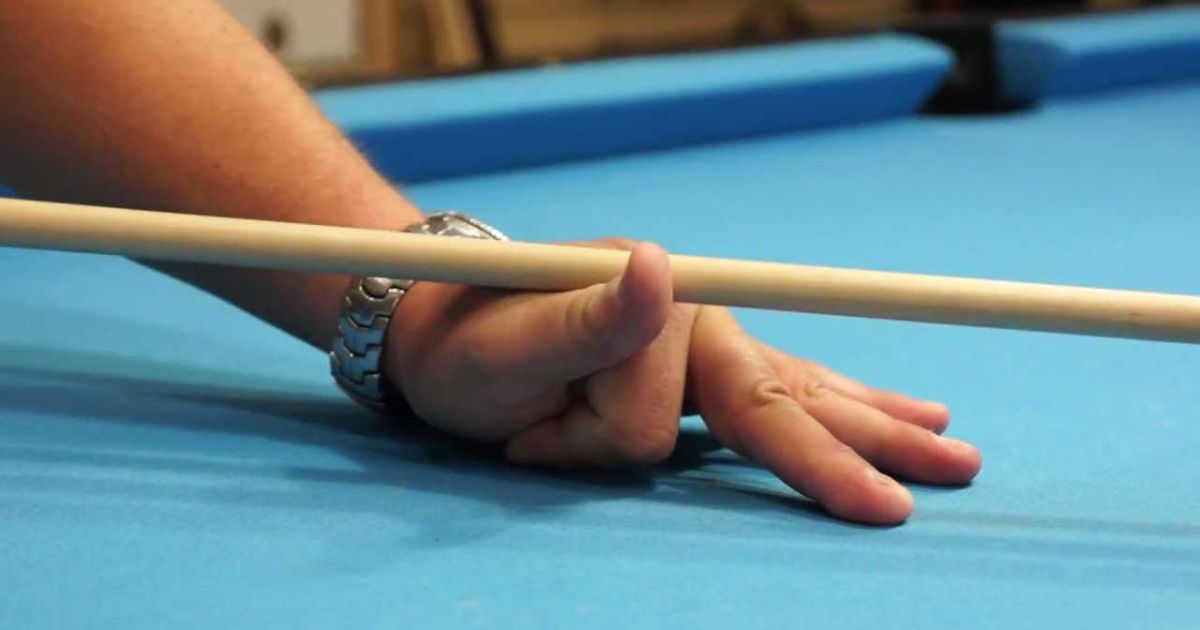
The bridge hand stance
The bridge hand plays a significant role in supporting and creating precision in billiards. Its purpose is to offer a steady path for the cue stick to follow while striking the cue ball.
Below are the steps to form a stable and effective bridge:
- Place your hand on the table while your fingertips touch the surface.
- Make sure your hand is stable without moving.
- Position your fingers comfortably so the cue stick moves smoothly and reliably.
- Try not to rest just on your fingertips.
There are two common bridge techniques:
- Open Bridge: In an open bridge, your thumb and index finger make a V-shape to support the cue stick. This style gives you flexibility and clear sightlines, is perfect for shots needing spin or English, and works well for various shot types.
- Closed Bridge: In a closed bridge, your index finger rests on the cue stick, and your thumb wraps around it, creating a closed loop. This bridge gives you more stability and control, perfect for accurate shots like straight-in shots or delicate position plays.
Tip 4: Aligning the Body with the Shot
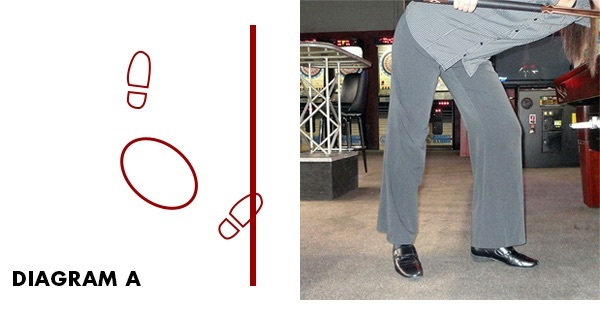
Aligning the body for better comfort to make accurate shot. Source: Pooldawg
Aligning the body in the pool is essential as it affects your shot accuracy and overall performance. Your cue stick will move smoothly along the path when your body aligns. In contrast, misalignment can lead to out-of-target and inconsistency in your game.
Here are tips on aligning shoulders, hips, and legs with the intended shot direction for you to follow:
- Shoulders: Your shooting shoulder should be directly straight to the target line. Avoid rotating or leaning your shoulder away from the shot.
- Hips: Maintain a square hip-to-shot line alignment. Avoid over-rotating them, as this might cause alignment issues.
- Legs: Maintain a shoulder-width distance between your feet as you align them with the shooting line. Equally, distribute your weight on both feet.
A tip for quickly aligning your body is to use visual cues. A visual cue, such as the target line or the cue stick, can help you aim straight from your body to the cue ball. Then, you can have the correct position and distance to adjust your body suitably.
Tip 5: Adjusting the Cue Grip
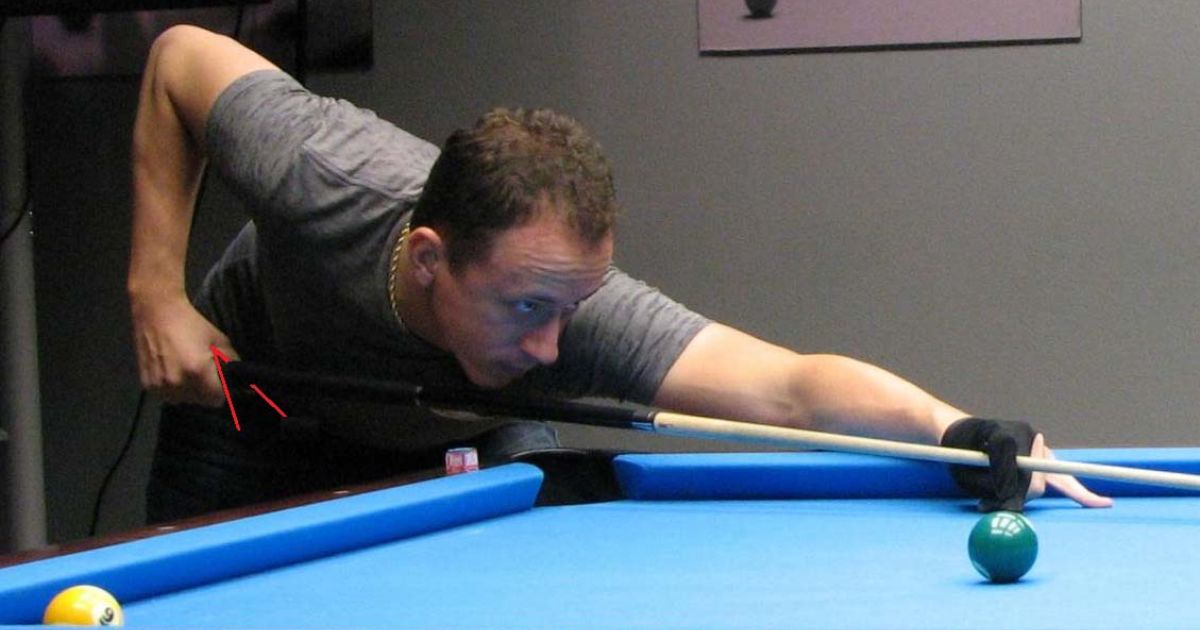
Grip the pool cue close to your waist
Attention to how you hold the cue can quickly improve your pool game. Many players grip it too tightly, making the shots less accurate and smooth.
Instead, try holding the cue gently and loosely. This way, you’ll have better control over the ball when you shoot. Also, it helps to rest your whole hand on the table, giving you more leverage and making your grip more effective.
Here is how to adjust the cue grip:
- Grip the pool cue close to your waist with your preferred hand.
- Reach for the back end of the cue once you’ve got a good grip.
- Look for tape marks on the cue’s back to guide your hand placement.
- Ensure your hand is at least 4 or 5 inches from the tape. You’ll know you’re gripping it right when your hand forms a 90° angle.
Tip 6: Balancing Your Weight
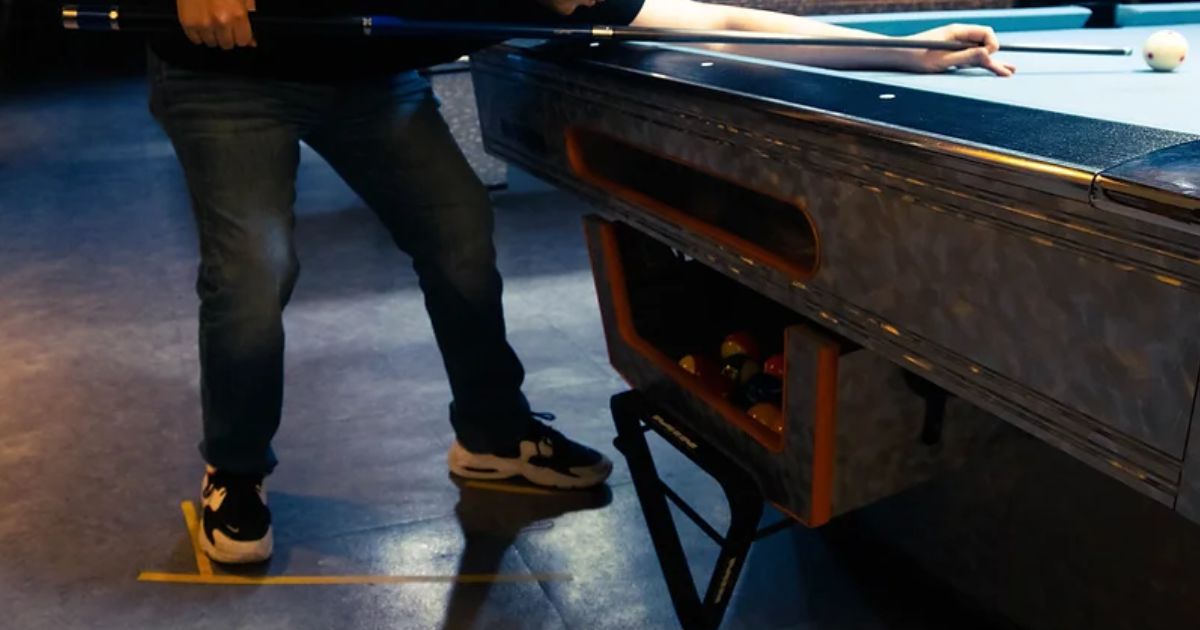
Balance your weight between both legs
It would be best to balance your weight between both legs, avoiding putting more weight on one leg than the other. This balance helps you stay steady and relaxed.
Sometimes, you need to adjust your weight distribution slightly on different shots. For example:
- For longer shots: These shots require more power, so you should put more weight on your back foot to create force.
- For delicate shots, you should shift more weight on your front foot, as these shots require maintaining control.
The benefits of proper weight balance on shot execution:
- Stability: It keeps your body stable and secure, making your shots more accurate.
- Power: It gives you extra power in your shots, especially for long ones or break shots.
- Control: With your balanced weight, you can control where the cue ball goes, allowing you to do it strictly on purpose.
- Consistency: Keeping your weight balanced can build up muscle memory, making your shots more reliable.
6 Common Mistakes to Avoid
If you have struggled to create an accurate and smooth shot for a long time, you may be in trouble with some mistakes related to the billiard stance. You should check and follow the common mistakes below to adjust and improve your play pool.
- Leaning too much: Lean only a little forward or backward. Leaning too much can affect your balance and make your shots less accurate.
- Feet too close: Keep your feet shoulder-width apart for better stability. Standing too close together makes you unbalanced.
- Wrong foot angle: Make sure your feet are angled comfortably, about 45 degrees to the shot line. It helps you aim better and stay steady.
- Changing position: Try to keep your stance consistent. Changing it for each shot can mess up your game.
- Gripping too tight: Don’t hold the cue stick too tightly. It restricts your movement and makes your shots less smooth. Keep a relaxed grip.
- Ignoring balance: Make sure your weight is spread evenly between both feet. This balance will keep you steady and help you make better shots.
Frequently Asked Questions
What is the proper stance in pool?
The proper pool stance involves keeping your feet shoulder-width apart, your front foot slightly forward, knees slightly bent, and your body balanced for control and stability.
Should my legs be bent in pool stance?
Yes, your legs should be slightly bent to maintain balance and allow flexibility when taking your shot.
What is the difference between snooker and pool stance?
In snooker, the stance is typically more upright and closer to the table, while in pool, the stance is lower, with more bend in the knees and a wider foot position for stability.
