
Did you know that one of the most common mistakes beginners make when choosing a pool cue tip is overlooking the importance of a pool cue tip hardness chart?
Often overshadowed by cue weight or design considerations, the cue tip is important in a player’s ability to control the cue ball and execute shots effectively on the pool table.
Once you understand the importance of hardness, let’s examine the list that Pearson Cues researched and created below.

Understanding Cue Tip Hardness
The seemingly simple cue tip at the end of your pool cue acts as the point of contact, transferring the energy from your stroke to the cue ball. This transfer of energy has a significant impact on 3 key aspects of your shot:
- Spin: The cue tip’s grip on the cue ball allows you to impart spin, causing the ball to rotate after it’s been struck. You can use this rotation for various techniques like draw shots (backspin) for better stopping power or follow shots (topspin) to control the cue ball’s path after contact with other balls.
- Power: A good cue tip efficiently translates to powerful breaks and controlled strokes for precise cue ball positioning.
- Accuracy: The cue tip’s material and condition also affect the accuracy of your shot. A well-maintained tip with the right hardness for your playing style provides a consistent feel and grip, leading to more predictable cue ball movement.
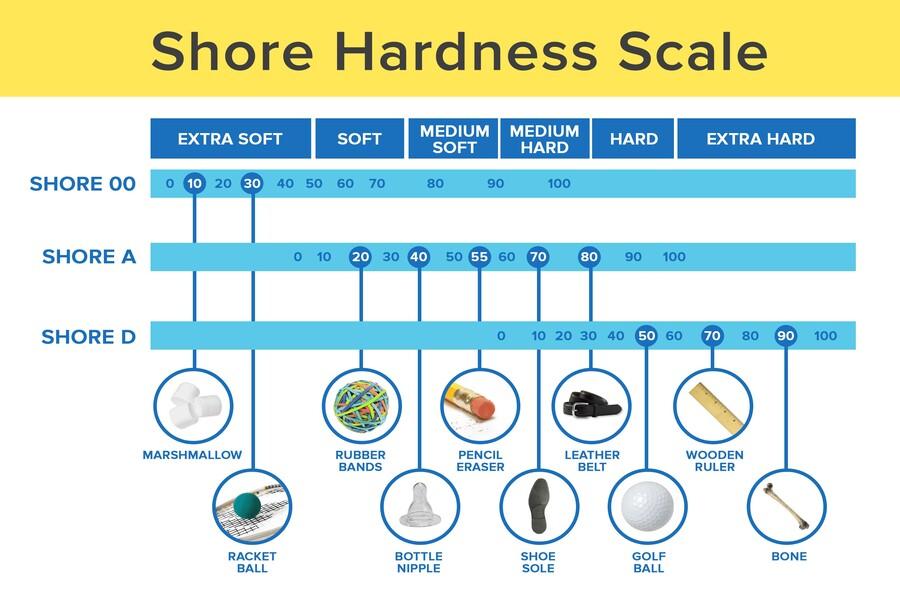
But how can we measure the hardness of a pool cue tip? This is where the concept of the Shore A Durometer scale comes in. The Shore A Durometer scale is a measurement system specifically designed to measure the hardness of a material, particularly polymers like the leather used in cue tips.
It ranges from 0 (softest) to 100 (hardest). By employing this scale, cue tip manufacturers and players alike can precisely assess and compare the hardness of different tip models.
You can see the image below to comprehend better how pool cue tip hardness can be measured.
To understand the impact of hardness, Pearson Cues has categorized based on 3 levels:
- Softer tips (Shore A 60-75) offer better grip on the ball, allowing for more backspin and better control on delicate shots. They’re also easier to shape and don’t get scuffed as much. However, they wear down faster and need more maintenance than harder tips.
- Medium tips (Shore A 70-80) balance grip and durability well. This makes them suitable for various players, from beginners to advanced. You can execute most shots effectively, with decent spin capabilities and enough power for controlled strokes.
- Harder tips (Shore A 80+) are great for powerful shots and breaks because they transfer power efficiently and don’t require much maintenance. However, compared to softer tips, they offer less grip, making it more challenging to apply spin or execute finesse shots with the same level of precision.
The Ultimate Pool Cue Tip Hardness Chart
The number of pool cue tips available today can be extremely overwhelming. That’s why we’ve researched and created the pool cue tip hardness chart below to help you make wise decisions.
| Tip Brand | Hardness Rating | Hardness |
| Zan | Soft | 66.3 |
| Elk Master | Soft | 66.8 |
| Kamui Black | Soft | 67.5 |
| Da Vinci | Soft | 68.7 |
| Black Heart | Soft | 68.7 |
| 5280 Red Line | Soft | 69.2 |
| Kamui | Soft | 69.2 |
| Morakami | Soft | 72.0 |
| Kamui Black | Soft | 72.3 |
| Aramith Laminated | Soft | 72.6 |
| Moori | Soft | 72.8 |
| Da Vinci | Soft | 73.6 |
| Fuji | Soft | 74.2 |
| Morakami | Soft | 74.3 |
| G2 | Soft | 74.8 |
| Hirano | Medium | 75.2 |
| Predator Victory | Medium | 75.3 |
| Moori | Medium | 75.5 |
| Flying Pig | Medium | 75.5 |
| Tiger Everest | Medium | 75.7 |
| Aramith Laminated | Medium | 75.8 |
| Tiger Emerald | Medium | 76.0 |
| Tiger Onyx | Medium | 76.4 |
| Black Heart | Medium | 76.6 |
| Tiger Laminated | Medium | 76.7 |
| Zan | Medium | 77.8 |
| Tiger Sniper | Medium | 77.8 |
| Kamui II | Medium | 78.1 |
| Tiger Laminated | Medium | 78.2 |
| Fuji | Medium | 78.5 |
| Kamui Black | Medium | 78.7 |
| Talisman Pro | Medium | 79.6 |
| Great White | Medium | 79.6 |
| Predator Victory | Medium | 79.8 |
| G2 | Hard | 80.1 |
| Morakami | Hard | 81.3 |
| Tiger Laminated | Hard | 81.7 |
| Da Vinci | Hard | 81.9 |
| Talisman Water Buffalo | Hard | 82.0 |
| Kamui II | Hard | 82.2 |
| Talisman Water Buffalo | Hard | 83.2 |
| Tweeten Virgin | Hard | 83.3 |
| Kamui II (Medium) | Hard | 83.4 |
| Talisman Pro | Hard | 83.5 |
| Fuji | Hard | 83.8 |
| Predator Victory | Hard | 84.3 |
| Moori | Hard | 84.4 |
| Talisman Pro | Hard | 84.4 |
| Hirano | Hard | 84.8 |
| Kamui Black | Hard | 84.8 |
| G2 | Hard | 85.5 |
| Aramith Laminated | Hard | 86.6 |
| Zan | Hard | 87.4 |
| Morakami | Hard | 87.5 |
| Le Pro | Hard | 88.2 |
| Black Heart | Hard | 88.2 |
| WB Water Buffalo | Hard | 88.2 |
| Talisman Pro | Hard | 88.7 |
| Blue Elf | Extra hard | 90.4 |
| Hirano | Extra hard | 90.6 |
| Triangle | Extra hard | 91.0 |
| Triumph | Extra hard | 92.0 |
| Kamui II | Extra hard | 92.2 |
| Samsara Jump Break | Extra hard | 95.5 |
Choosing the Right Cue Tip Hardness
When learning how to play pool, knowing how to choose the right cue tip hardness can help you save time and money in the long run.
But as a beginner, how can you determine which one is the best fit for you? A pool cue tip hardness chart is not enough. If you are stuck in this confusing situation, see the guide below.
Consider Your Playing Style
Every pool player must consider 3 factors before determining a cue tip hardness: shot preferences, spin control, and power vs. precision.
Hence, let’s ask yourself the following 3 questions before purchasing any cue tip:
- Are you more willing to shoot finesse shots that require a delicate touch, or do you favor powerful strokes and break shots?
- Do you frequently use backspin (draw) or sidespin to shape the cue ball’s trajectory?
- Are you willing to sacrifice some finesse for increased power, or do you prioritize accuracy and control?
Once you understand what you need and your preferred style, you can find the most suitable pool cue, not just the tip. If you’re a beginner, you may want a high-quality cue stick at an affordable price.
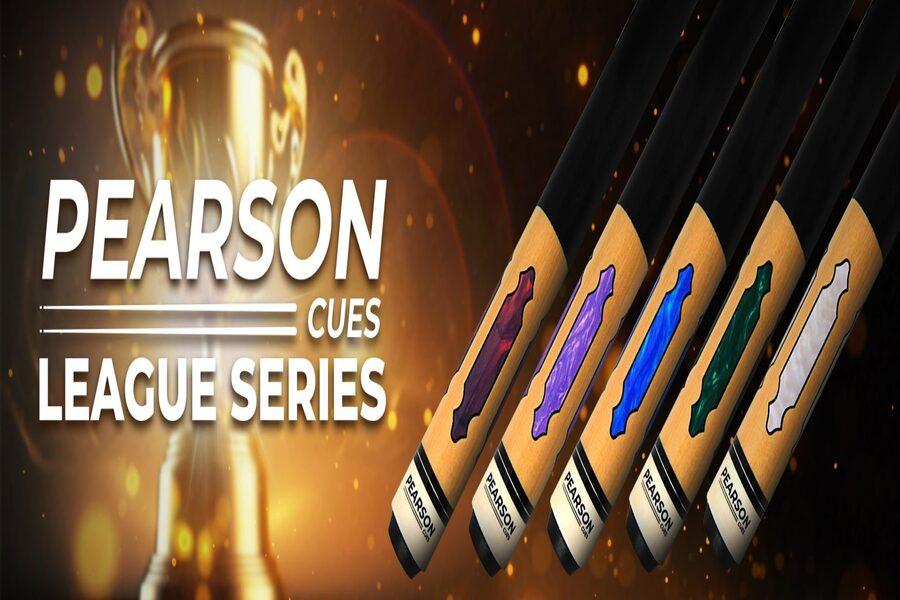
Hence, Pearson League Cue Series can be a good choice! Made from durable and strong grade-A maple that is hand-selected, these pool cues ensure longevity in the long run. Let’s see what this series looks like:
Match Your Tip Hardness To Your Skill Level
Soft tips are preferred by players who want more control and spin on the ball. Soft tips absorb more impact, allowing for a quieter, more controlled shot. They are often favored for imparting more spin on the ball, which is useful for advanced techniques like drawing, spinning, or curving the cue ball.
Hard tips are more durable and require less maintenance than soft tips. They are generally favored by players who play a lot or prefer a more consistent hit over many games.
Hard tips hold their shape better, making them ideal for breaking, and long, straight shots where less deformation at the point of contact provide more stability and predictability.
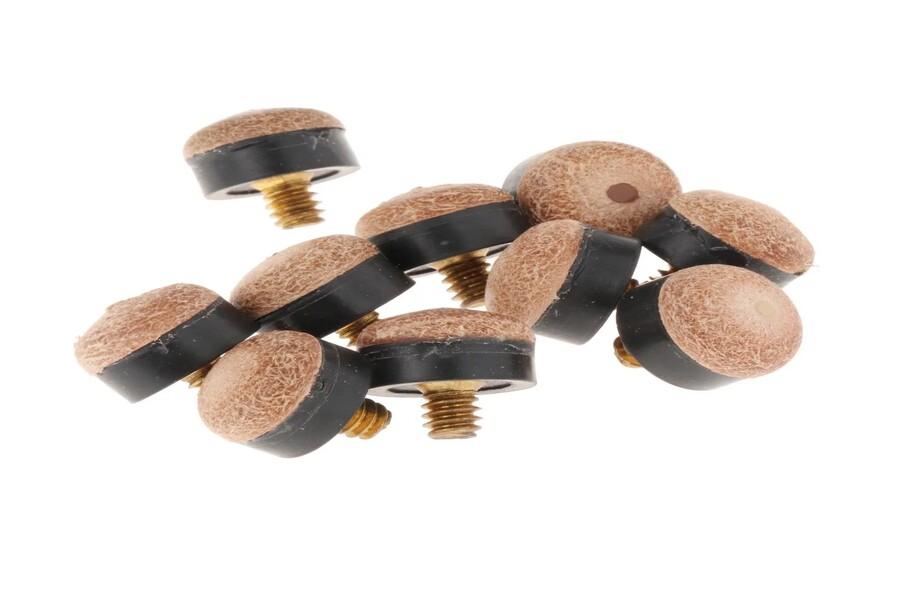
The image below shows that these harder tips can also withstand the wear and tear of more advanced techniques without sacrificing performance by high-quality materials.
Experimentation Is Key: Try Different Tip Hardnesses To Find What Works Best
Each player has a unique style and feel for the game, so what works well for one player may not necessarily work for another. You can explore what feels most comfortable and natural by trying tip hardnesses.
Moreover, cue tip hardnesses may perform differently depending on table conditions, cue ball material, and your opponent’s playing style. Being adaptable and familiar with various tip hardnesses allows you to adjust your game accordingly and perform consistently in different situations.
Experimenting with different tip hardnesses can significantly aid in skill development. Softer tips may help you improve your spin control and finesse shots, while harder tips may enhance your power and break shots. Over time, this experimentation can lead to a more well-rounded and versatile game.
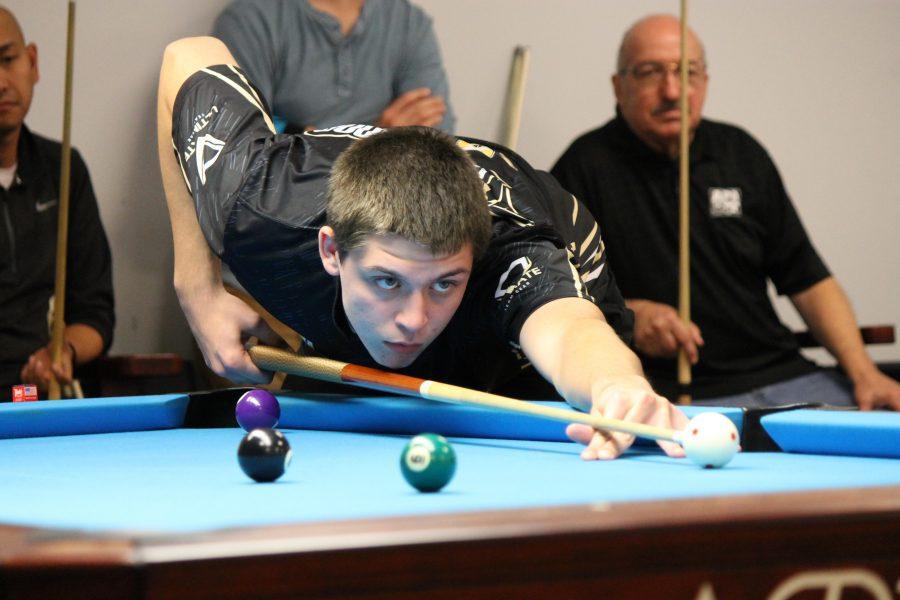
Don’t be afraid to experiment with different cue tip hardnesses to see what works best. Playing pool by yourself can help you fine-tune your equipment and improve your performance and game experience.
Conclusion
Hopefully, our pool cue tip hardness chart can help you choose the right one to maximize your performance on the billiards table. When selecting a cue tip, let’s consider your playing style, skill level, and personal preferences.
And don’t forget that experimentation is key to finding the perfect balance of control, power, and precision. By understanding your needs and trying out different tip hardnesses, you can elevate your game and enjoy a more fulfilling experience.
Frequently Asked Questions
- What hardness of cue tip should I use?
It is a softer tip. The theory is that softer tips allow for more English and control over the ball. In addition, softer tips are typically easier to scuff and have better chalk retention. Harder tips, however, require far less maintenance than soft tips.
- Do pros use hard or soft cue tips?
Pro pool players typically use soft tips (Shore A 60-70). These tips offer a good balance between spin and power, allowing pros to execute a wide range of shots effectively, from powerful breaks to controlled finesse shots with spin. Also, pros use soft tips for better control and generally have a break stick with a hard tip for breaking.
- What tip do most professional pool players use?
It’s Elk Master 13mm. Elk Master 13mm pool billiard cue tips are known for being crafted from prime mineral-tanned leather, resulting in a tip that wears well and holds its shape.
They are considered soft tips, typically having a Shore A hardness rating of around 60-61.
- What is the best cue tip for draw?
It’s Predator Victory billiard tip. This hardness range provides a good balance between grip and durability. While softer tips (Shore A 60-70) might offer slightly better grip for draw shots, they also tend to be less durable and require more frequent maintenance.
Predator Victory’s medium hardness provides enough grip for most draw applications without sacrificing too much on power or tip life.
